
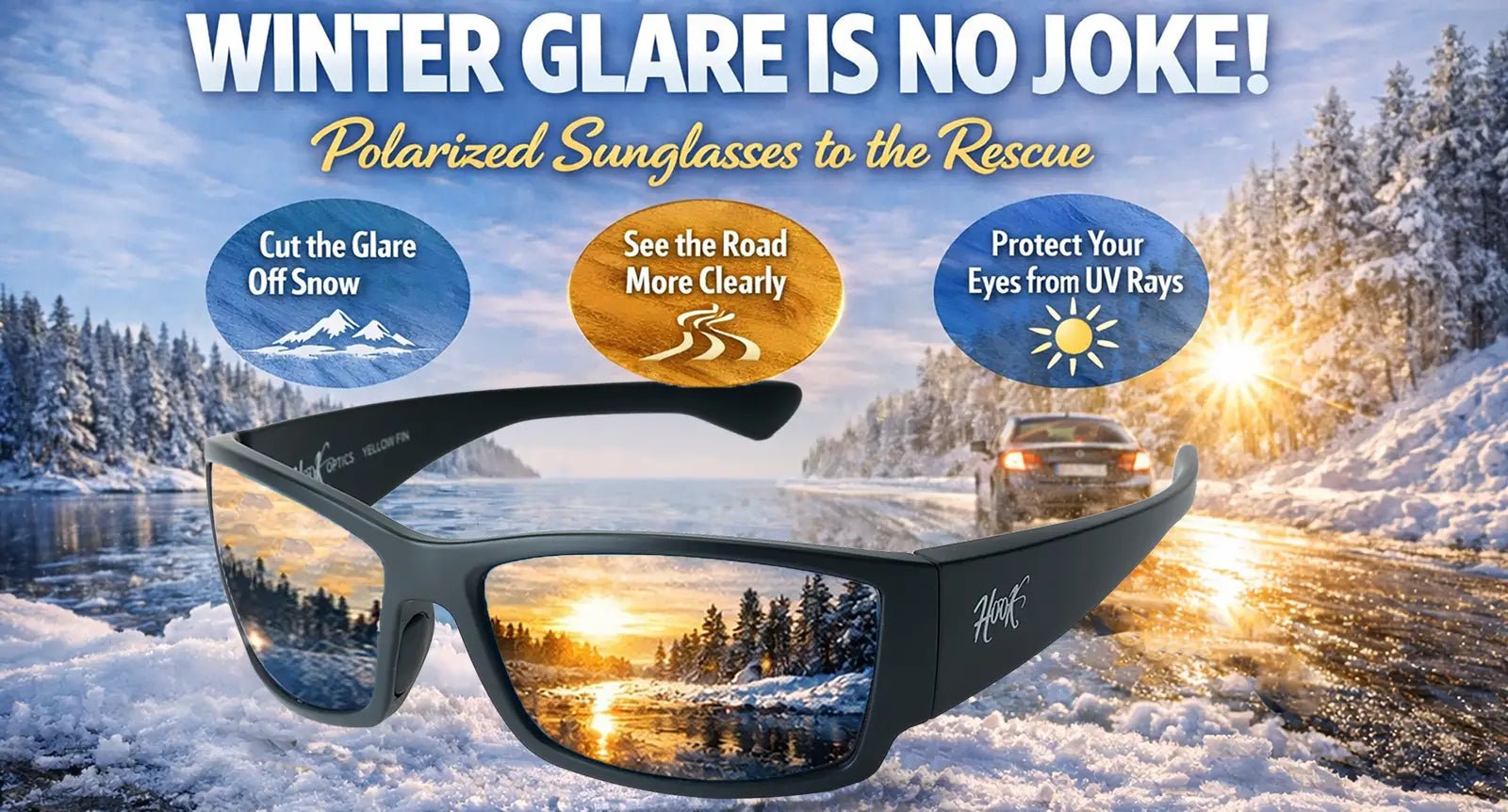
Winter might feel softer on the eyes than summer, but the glare tells a different story.
In colder months, the sun sits lower in the sky. That low angle sends light straight into your eyes and bounces it off everything in front of you: water, wet roads, windshields, ice, even light colored concrete. The result is sharp, blinding glare that causes squinting, eye strain, and fatigue faster than most people realize.
This is exactly where polarized sunglasses make a real difference.
Unlike summer, the winter sun stays closer to the horizon. That means more direct light hits your eyes throughout the day, especially in the morning and late afternoon.
Snow, ice, and wet pavement act like mirrors. They reflect light upward, right into your eyes, increasing glare and visual discomfort.
Cloudy does not mean safe
Even on overcast winter days, UV rays still reach your eyes. Reflection from snow and water can actually increase exposure, even when the sun does not feel strong.
What polarized lenses actually do
Glare is mostly horizontal light reflecting off flat surfaces like water, ice, roads, and windshields.
Polarized lenses are designed to block that glare. When glare is reduced:
- Your eyes relax
- Contrast improves
- Details are easier to see
- Long days outside feel noticeably more comfortable
If you drive and spend any time outdoors in winter, polarization is not about style. It is about seeing clearly without fighting the light all day.
Where polarized sunglasses shine in winter
Winter fishing and boating
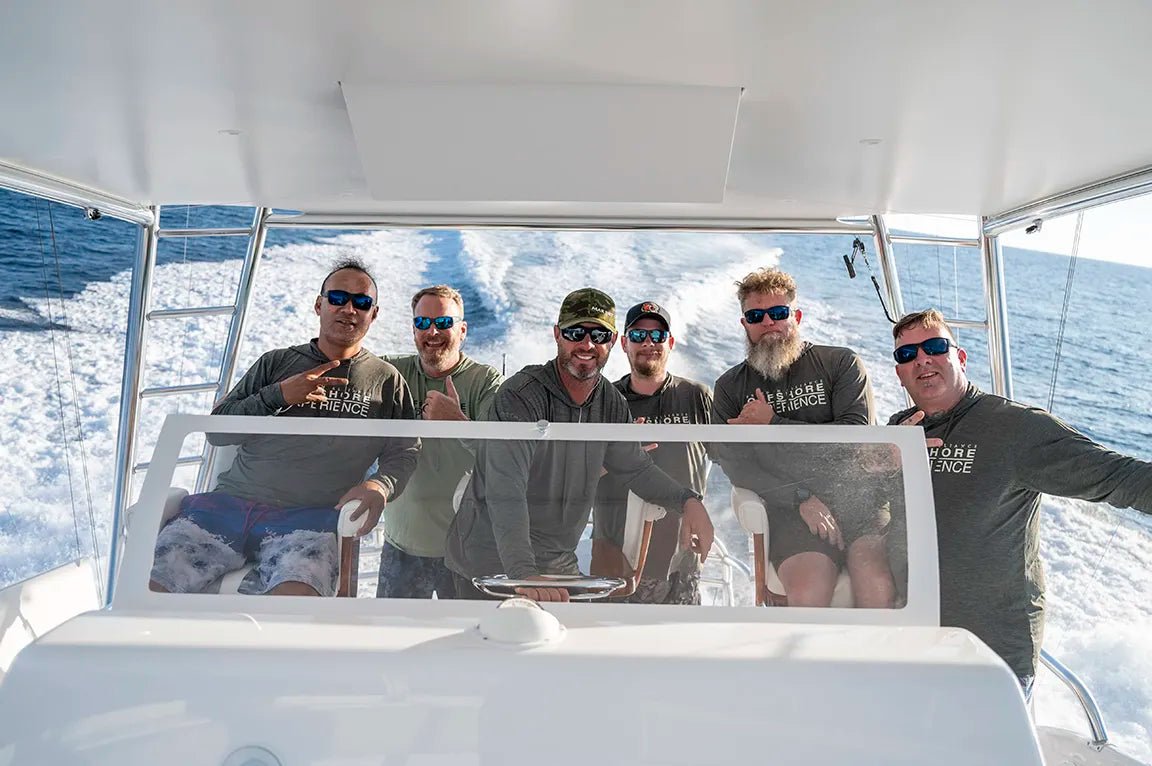
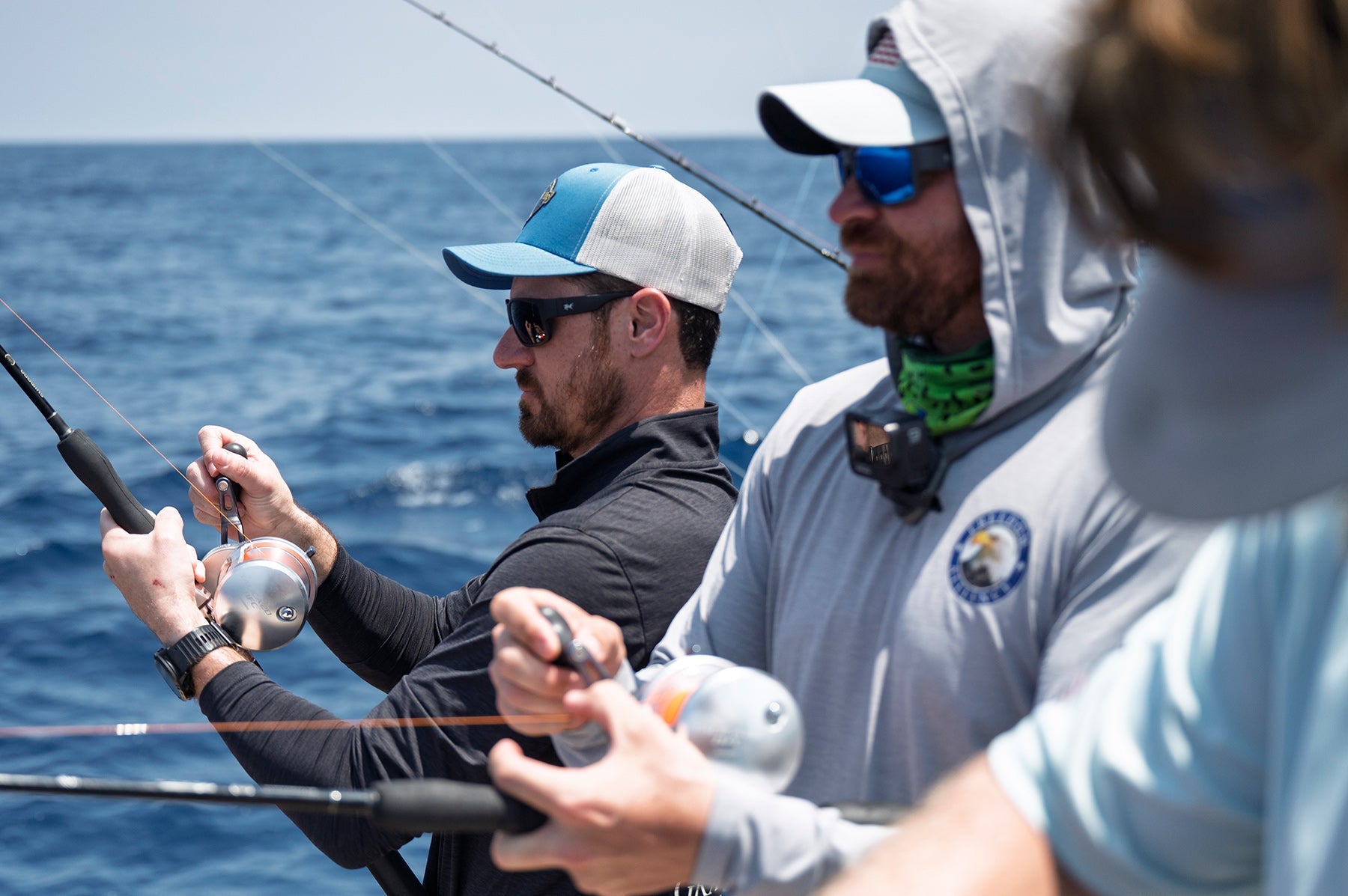
Low winter sun reflecting off the water can be brutal. Polarized lenses cut that surface glare so you can focus on reading the water, spotting movement, and staying comfortable even on bright, cold days.
Driving
Winter driving often means sun directly in your windshield, reflections off wet roads, and glare bouncing off ice patches. Polarized sunglasses help reduce that strain, making it easier to see clearly and stay alert behind the wheel.
Everyday outdoor life
Walking, running errands, watching sports, or working outside. Winter glare is everywhere, and polarization makes everyday moments easier on your eyes.
UV protection still matters in winter
Polarization reduces glare, but UV protection protects your eyes long term.
Snow can reflect a significant amount of UV light, meaning your eyes are exposed from above and below. That is why winter sunglasses should always offer full UVA and UVB protection, even on cloudy days.
A quick and important note about skiing
Polarized lenses are not ideal for downhill skiing.
Glare can sometimes help skiers detect icy patches on the slopes. Polarized lenses reduce that glare, which may make ice harder to spot. This can increase the risk of slipping or falling.
If you choose to ski while wearing polarized sunglasses, be aware of this limitation and proceed with caution.
Choosing the right winter sunglasses
A few simple tips:
- Look for lenses with 100% UVA and UVB protection like Hook Opticss
- Choose lens colors like gray for bright sun or copper and brown tones for better contrast in changing winter light
- Make sure the frame offers good coverage to block side glare and cold wind
Why Hook Optics makes sense in winter
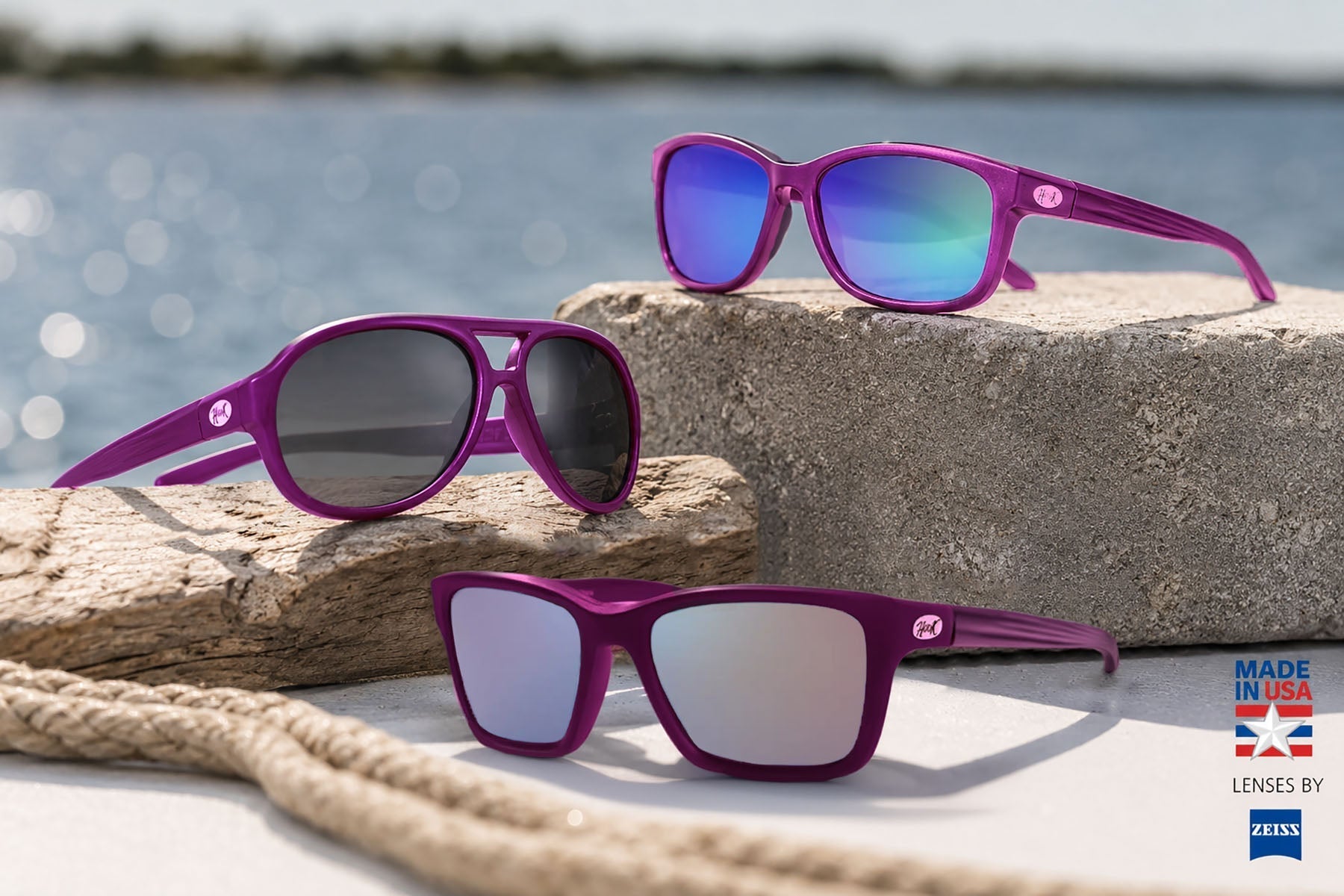
Hook Optics polarized sunglasses are built for real-world glare, not just summer days.
Winter glare is sharper, lower, and often more exhausting on the eyes. When glare is reduced, you feel more comfortable, stay focused longer, and enjoy being outside more.
Once you wear polarized sunglasses in winter, you will wonder how you ever went without them.